GREG’S PIZZA LABTHE GEAR ROOM

What I use · What to look for

Greg’s
Gear Room.

The equipment behind the bake. Choose what you’re making for my gear, useful upgrades and a practical place to start.

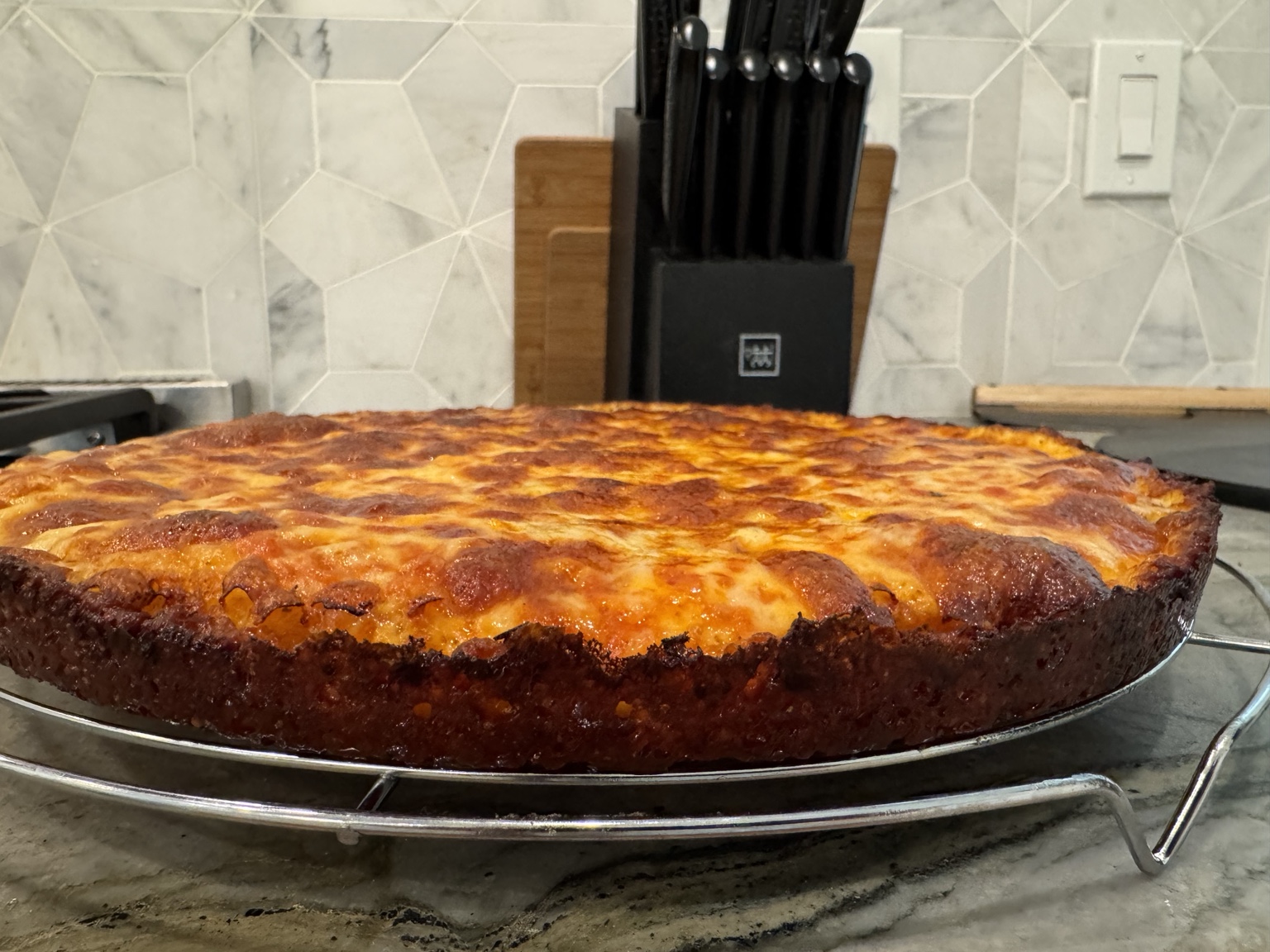
Greg’s deeply browned pan pizza cooling on a rack in his kitchen
From my kitchen to yours.

A note on shopping links: I earn a commission from purchases made through links marked Affiliate link, or using my Baking Steel code. Other links go to manufacturer product information. Comparable products and buying-guide examples are identified below.

What are you making?

Your gear guide

15 gear guides

In Greg’s kitchen

My own equipment, with comparable products identified.

In my kitchen

Baking Steel Original

Upgrade

16 × 14 in · ¼ in thick · 15 lb

A steel baking surface that stores heat and transfers it into the bottom of your pizza.

Why I use it
I use Baking Steel for home-oven pizza. The Original is the smaller and lighter of the two steels in my setup.
Who it’s for
Home bakers who want to move from a tray to baking directly on a preheated surface.

Measure your oven and check its rack load limit. Start with one steel and follow the preheating and care instructions.

In my kitchen

Baking Steel Pro

Upgrade

16 × 16 in · ⅜ in thick · 27 lb

A larger, thicker steel with more mass to store heat between pizzas.

Why I use it
The Pro is my other Baking Steel. It gives me a larger square surface for my home-oven setup.
Who it’s for
Bakers making pizza regularly who have the oven space and rack capacity for a heavier steel.

You do not need the Original and Pro together. The Pro weighs 27 lb; check fit and rack capacity before buying.

In my kitchen

Sunmix spiral mixer

Upgrade

My mixer brand · Pizza & bagel dough

A spiral mixer kneads dough with a spiral hook and rotating bowl.

Why I use it
I use a Sunmix for pizza and bagel dough. It takes over the mixing work when I am making batches regularly.
Who it’s for
Frequent bakers whose batch sizes justify a dedicated dough mixer.

Choose by minimum and maximum dough capacity, not bowl volume alone. Stiff bagel dough may have different capacity limits. The link shows the range, rather than claiming an exact match to my model.

In my kitchen

Gozney outdoor ovens

Upgrade

Original Dome owner · Two Dome XL (Gen 2) ovens for my planned trailer

A dedicated outdoor pizza oven provides a hot baking floor and overhead heat in a compact cooking space.

Why it’s here
Gozney is part of my own equipment setup. I own an original Dome and have two Dome XL (Gen 2) ovens for my planned trailer.
Who it’s for
Bakers who want a dedicated outdoor setup and have a suitable space for it.

The link is for the current Dome XL (Gen 2), not my original Dome. My trailer equipment choice is not a hands-on review of the XL. Check space, fuel and installation requirements.

In my kitchen

Pizza peel

Essential

For launching and retrieving pizza

A peel moves a stretched, topped pizza onto the baking surface and brings the finished pizza out.

Why I use it
My peel gets used when I fire up the oven: it is how I launch and pull my pizzas.
Who it’s for
Anyone baking pizza directly on a steel, stone or outdoor oven floor.

Match the blade to your pizza size and the oven opening. Allow enough handle length to work comfortably away from the heat.

In my kitchen

Pizza wheel

Optional

For slicing the finished pizza

A rolling blade cuts pizza into slices. A suitable knife can also do the job.

Why I use it
My pizza wheel is the drawer tool I reach for after a bake.
Who it’s for
Anyone who prefers the speed and feel of a wheel when portioning pizza.

Cut on a suitable board, not inside a coated pan or directly on your steel. Choose a sturdy wheel with a comfortable grip.

Build your kit

Practical buying guides. Use what you already have where it works.

Buying guide

Pizza pans

Essential

Match the pan to the pizza you want to bake

The pan holds the dough in shape and affects how the base and edges bake.

Why it’s here
Straight sides suit a Detroit-style pizza; a shallower rectangular pan suits a different dough depth. Pan dimensions matter as much as the name of the style.
Who it’s for
Pan-pizza bakers choosing a first pan or adding a second shape.

Useful formats to compare: 8 × 10 in Detroit, 12 × 16 in rectangular and 12 in round. Scale dough to the pan area. Check the maker’s temperature limit and care instructions.

Buying guide

Digital scales

Essential

Main scale: grams · Small-ingredient scale: finer resolution

A scale measures flour, water and dough portions by weight. A second fine-resolution scale can help with tiny yeast quantities.

Why it’s here
Weighing ingredients makes a batch easier to repeat and lets you portion dough consistently.
Who it’s for
Every pizza or bagel baker. A basic gram scale is the first purchase; a precision scale is a later upgrade if your recipe needs it.

Check capacity with your mixing bowl included, tare function, display visibility and resolution. A reading of 1 g is not fine enough for a recipe calling for 0.2 g of yeast.

Buying guide

Infrared thermometer

Upgrade

For surface temperature

An infrared thermometer reads the surface it is pointed at, such as an oven’s stone baking floor.

Why it’s here
It helps you check the baking surface instead of relying only on an oven’s air-temperature display.
Who it’s for
Outdoor-oven bakers especially, and home bakers comparing suitable baking-surface temperatures.

Infrared does not measure inside dough. Shiny bare metal can give misleading readings; follow the thermometer’s guidance for the surface you are measuring.

Buying guide

Instant-read thermometer

Upgrade

For dough, water and food temperature

A probe thermometer measures temperature where its tip is inserted. It serves a different purpose from an infrared thermometer.

Why it’s here
Measuring mixing water and finished dough can help you understand why fermentation behaves differently from one day to the next.
Who it’s for
Bakers who want more control over dough temperature and a useful thermometer for the rest of the kitchen.

Use the probe within its rated range. An instant-read probe is not meant to stay inside a hot oven unless the manufacturer expressly allows it.

Buying guide

Covered dough containers

Essential

A suitable container you already own may work

Covered containers hold dough during fermentation and help keep its surface from drying out.

Why it’s here
Enough headroom, a good fit in the refrigerator and a lid make dough handling more predictable.
Who it’s for
Anyone making dough ahead of the bake. Individual boxes are optional; a suitable covered food container can be enough.

Leave room for expansion and use food-safe containers. Measure fridge shelf space before buying a full set.

Buying guide

Bench scraper

Optional

For dividing dough and clearing the bench

A bench scraper divides dough and helps lift sticky pieces from a work surface.

Why it’s here
It is a useful companion to a scale when dividing a batch into pizza balls or bagel portions.
Who it’s for
Bakers who regularly portion dough by hand.

Use a scraper material suited to your worktop. Avoid scraping coated pans with a sharp metal edge.

Buying guide

Bagel boiling pot & skimmer

Essential

Start with a suitable pot and utensil you already have

A roomy pot holds the boiling bath. A spider or slotted skimmer helps lower, turn and lift the bagels.

Why it’s here
Enough space to work without crowding makes the boiling step easier to handle.
Who it’s for
Anyone following a boiled-bagel recipe.

Allow headroom for bubbling and displacement. Pick a heat-safe skimmer that supports the bagel and follow your recipe’s bath and timing instructions.

Buying guide

Baking trays & cooling racks

Essential

Tray for bagels · Rack for cooling

A baking tray carries bagels through the oven. A rack lets air reach underneath after baking.

Why it’s here
Cooling off the hot pan gives steam a way to escape instead of collecting beneath the crust.
Who it’s for
Bagel bakers and pan-pizza bakers who want a place to cool or briefly rest a bake.

Check oven fit and the liner’s heat rating. A cooling rack is not automatically oven-safe; read its specifications.

Buying guide

Turning peel

Upgrade

For rotating pizza during the bake

A smaller peel helps turn pizza so different sides face the strongest heat.

Why it’s here
It gives you more control when one side of an outdoor oven cooks faster than the other.
Who it’s for
Outdoor-oven bakers who regularly turn pizza while it bakes.

Check blade size and handle length against your oven. It supplements a launch peel; it is not the same purchase.

Buy for your next bake. “Essential” means the tool’s job matters for that setup—not that you need a particular brand. “Upgrade” adds capability or convenience. “Optional” is a preference. Product details and availability can change; check fit, care instructions and the current listing before ordering.